Comparisons
Explore the full comparisons wiki — every guide, tier list and breakdown for MARVEL Tōkon: Fighting Souls.
Introduction
MARVEL Tōkon: Fighting Souls sits at the intersection of three established fighting game genres — the Marvel hero team-up tradition, the ARC SYSTEM WORKS anime fighter polish, and the modern tag-team combat system — so comparison guides help players coming from Marvel vs. Capcom, Dragon Ball FighterZ, Marvel Rivals, Guilty Gear Strive, Tekken 8 and Street Fighter 6 find their footing. Tōkon is a 4v4 tag fighter with Quick Skill accessibility, Skill Gauge management as the core resource, and Assemble Rush / Follow-up Attack as the universal combo extender. Marvel vs. Capcom is 2v2 with classic 2D fighter execution, Dragon Ball FighterZ is 3v3 with ARC's hand-drawn anime aesthetic, Marvel Rivals is a 6v6 hero shooter, Guilty Gear Strive is 1v1 with the highest skill ceiling in modern FGC, and Tekken 8 and Street Fighter 6 are 1v1 3D / classic fighters. Our comparisons wiki gives a head-to-head breakdown of every key dimension — team size, art style, combo system, controller support, cross-play, ranked ecosystem, learning curve — for the five closest competitors so you can decide whether Tōkon fits your play style. We also map each Tōkon mechanic to its closest analogue in the older titles (L/M/H chains to FighterZ's light-medium-heavy, × Assist to MvC's assist calls, Assemble Rush to MvC's Hyper Combo) so veterans can transfer their muscle memory quickly.
Fighting Game Comparison Matrix
| Game | Team Size | Studio | Skill Ceiling |
|---|---|---|---|
| MARVEL Tōkon | 4v4 | ARC SYSTEM WORKS | Medium-High |
| Dragon Ball FighterZ | 3v3 | ARC SYSTEM WORKS | High |
| Marvel vs. Capcom | 2v2 | Capcom | High |
| Marvel Rivals | 6v6 | NetEase | Medium |
| Guilty Gear Strive | 1v1 | ARC SYSTEM WORKS | Very High |
| Tekken 8 | 1v1 | Bandai Namco | Very High |
Comparisons
vs Dragon Ball FighterZ
MARVEL Tōkon vs Dragon Ball FighterZ — 4v4 versus 3v3 tag team, both built by ARC SYSTEM WORKS.
vs Marvel vs. Capcom
MARVEL Tōkon vs Marvel vs. Capcom — 4v4 Marvel IP versus 2v2 crossover roster, different studio.
vs Marvel Rivals
MARVEL Tōkon vs Marvel Rivals — 4v4 fighter versus 6v6 hero shooter, different genre.
vs Guilty Gear Strive
MARVEL Tōkon vs Guilty Gear Strive — 4v4 tag versus 1v1 solo, same studio DNA.
vs Tekken 8
MARVEL Tōkon vs Tekken 8 — 4v4 tag versus 1v1 3D fighter, different dimensions.
vs Street Fighter 6
MARVEL Tōkon vs Street Fighter 6 — 4v4 tag versus 1v1 fighter, different systems.
Core Mechanics
Comparison mechanics across the five closest competitors: team size (Tōkon 4v4, FighterZ 3v3, MvC 2v2, Rivals 6v6, Strive 1v1), combo system (Tōkon's L/M/H chains map to FighterZ's similar chains, MvC's free-form chains, Strive's Roman Cancel extensions), art style (Tōkon uses bold Marvel hero designs, FighterZ uses Toriyama-style Dragon Ball, MvC uses classic 2D sprites, Rivals uses Unreal Engine heroes, Strive uses Guilty Gear original IP). Controller support is universal across all five competitors with DualSense haptic feedback on PS5 for Tōkon, MvC, Rivals and Strive. Cross-play is fully enabled in Tōkon, Rivals and FighterZ, partial in MvC and disabled in Strive ranked. Ranked ecosystem: Tōkon uses a 64-player Online Lobby plus traditional 1v1 ranked, FighterZ uses 3v3 ranked, MvC uses 2v2 ranked, Rivals uses 6v6 ranked, Strive uses 1v1 ranked. Learning curve: Tōkon has Quick Skill accessibility for newcomers, FighterZ has medium complexity, MvC has high complexity, Rivals has medium complexity (hero shooter), Strive has the highest skill ceiling in modern FGC.
Advantages
MARVEL Tōkon sits in a unique 4v4 tag-team niche that no other major fighting game currently occupies at this accessibility level. ARC SYSTEM WORKS' hand-drawn art style is the same pedigree as Dragon Ball FighterZ and Guilty Gear Strive, so the visual quality is proven. Marvel IP integration is the deepest in any current tag fighter — Episode Mode, canonical team placement, Motion Comic presentation all reinforce the Marvel universe. Quick Skill accessibility gives Tōkon a lower learning curve than Dragon Ball FighterZ and Guilty Gear Strive while preserving the depth for veterans. Cross-play between PS5 and PC with optional input filters is best-in-class for modern fighting games. The 64-Player Online Lobby is a unique social feature no competitor has — it lets players hang out, run tournaments and find Versus matches in a shared space, which feels closer to an arcade than a typical online lobby.
Challenges
Comparison challenges include the 4v4 niche — players coming from 1v1 fighters (Tekken 8, Street Fighter 6, Guilty Gear Strive) may find the four-character rotation overwhelming. Quick Skill accessibility, while great for newcomers, deals less damage than Command Input, which means the skill ceiling between Quick Skill and Command Input players is significant in ranked play. Marvel IP familiarity is a strength but also a weakness — players who don't care about Marvel may prefer original-IP fighters like Guilty Gear Strive. Episode Mode length (eight to twelve hours) is shorter than story-driven action games, which may disappoint players buying for single-player content. Stage count (six launch stages) is lower than Dragon Ball FighterZ and similar to Marvel vs. Capcom Infinite, which may feel sparse to players who like stage variety. Year-1 Pass delivery cadence (four characters and one stage before 2027-12-31) is slower than Street Fighter 6's more frequent character drops.
Frequently Asked Questions
Is MARVEL Tōkon harder or easier than Dragon Ball FighterZ?+
How does Tōkon compare to Marvel vs. Capcom?+
Should I buy Tōkon or Guilty Gear Strive?+
Quick Tips
Coming from Dragon Ball FighterZ? Map your team to four characters — Tōkon's 4v4 system means your 3v3 team needs one extra Assist slot, typically an Anchor with full Gauge.
Coming from Marvel vs. Capcom? Use the L/M/H chains as your baseline — Tōkon's chains are similar to MvC's free-form chains but more structured around the Skill Gauge.
Coming from Guilty Gear Strive? Lower your execution expectations but keep your neutral game sharp — Tōkon's Quick Skill accessibility forgives execution mistakes but rewards neutral reads and team rotation.
Featured
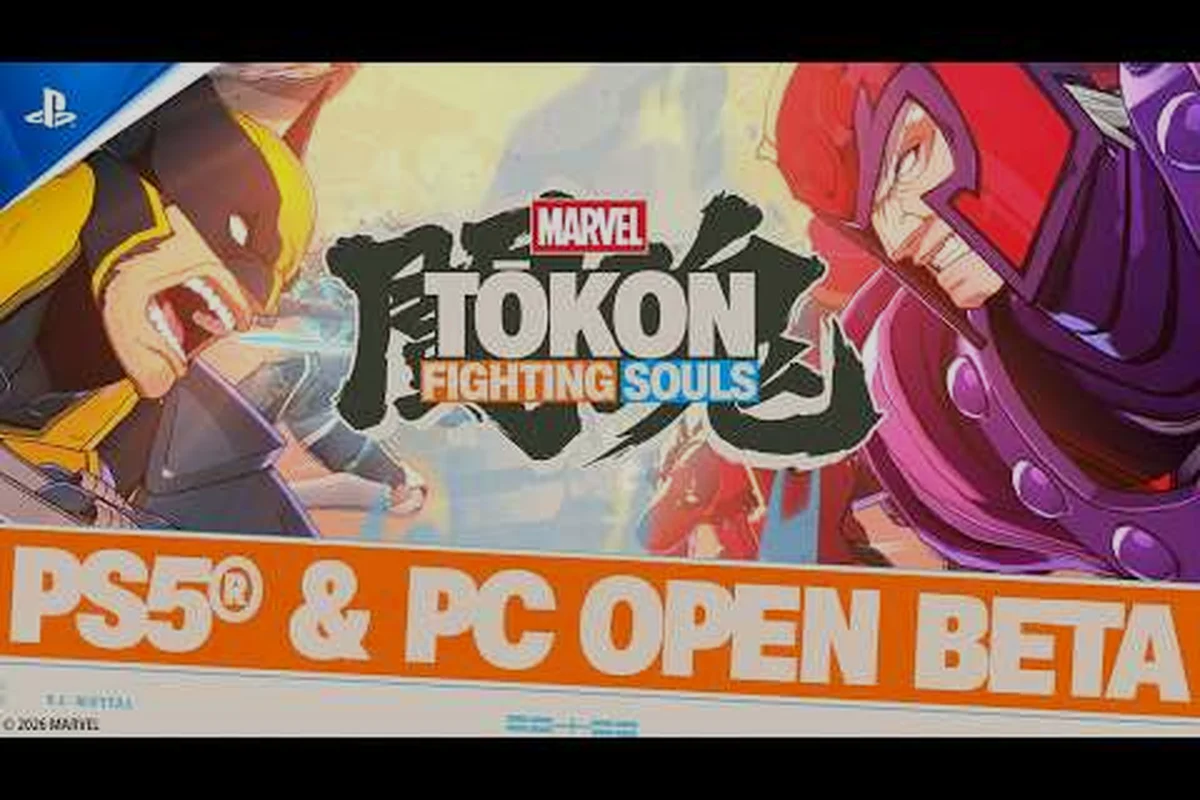
MARVEL Tōkon vs Dragon Ball FighterZ — 4v4 vs 3v3 Comparison
Detailed comparison between MARVEL Tōkon and Dragon Ball FighterZ. Learn 4v4 vs 3v3 mechanics, ARC SYSTEM WORKS style, and assist systems.
MARVEL Tōkon vs Guilty Gear Strive — 4v4 vs 1v1 Comparison
Detailed comparison between MARVEL Tōkon and Guilty Gear Strive. Learn 4v4 vs 1v1 mechanics, ARC SYSTEM WORKS heritage, and playstyle differences.
MARVEL Tōkon vs Marvel Rivals — 4v4 Fighting vs 6v6 Hero Shooter
Detailed comparison between MARVEL Tōkon and Marvel Rivals. Learn the fundamental differences between fighting games and hero shooters.
All Articles
MARVEL Tōkon vs Marvel vs Capcom — 4v4 vs 2v2 Comparison
Detailed comparison between MARVEL Tōkon and Marvel vs. Capcom. Learn 4v4 vs 2v2 mechanics, assist systems, and team dynamics.
MARVEL Tōkon vs Tekken 8 and Street Fighter 6 — Fighting Game Genre Comparison
Detailed comparison between MARVEL Tōkon, Tekken 8, and Street Fighter 6. Learn 4v4 vs 1v1 mechanics, 3D vs 2D combat, and playstyle differences.